The patient who made me an implant dentist
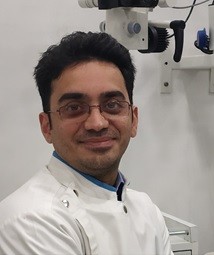 Dr Pushkar Sobti
All-on-X implantologist, Delhi
Every implant dentist has a patient they still think about. Mine was 79 years old and a cancer survivor. By the time he reached my chair, he had already been told that dental implants were not possible for him. His bone was too weak, he was told, and he was too old.
I understood why he had heard that. Weak bone and age are real things to consider. But in my experience they are reasons to plan more carefully, not automatic reasons to say no.
What he actually wanted
He did not come in asking for implants by name. He wanted to eat what his family ate. He wanted to stop thinking about his teeth every time he sat down to a meal.
That is what most of my patients want. Very few people care about the titanium screw. They want to bite into an apple again, or laugh without putting a hand over their mouth.
What the scan showed
Everything starts with a CBCT scan, a 3D X-ray of the jaw. A flat X-ray shows a shadow. A CBCT shows how tall and how wide the bone is, millimetre by millimetre, and exactly where the nerves and sinuses sit.
For a patient who has been told "not enough bone", that scan is where the real answer is. In his case it showed a way forward. We designed his new teeth on screen first, then planned the implants to support them, and only then planned the surgery.
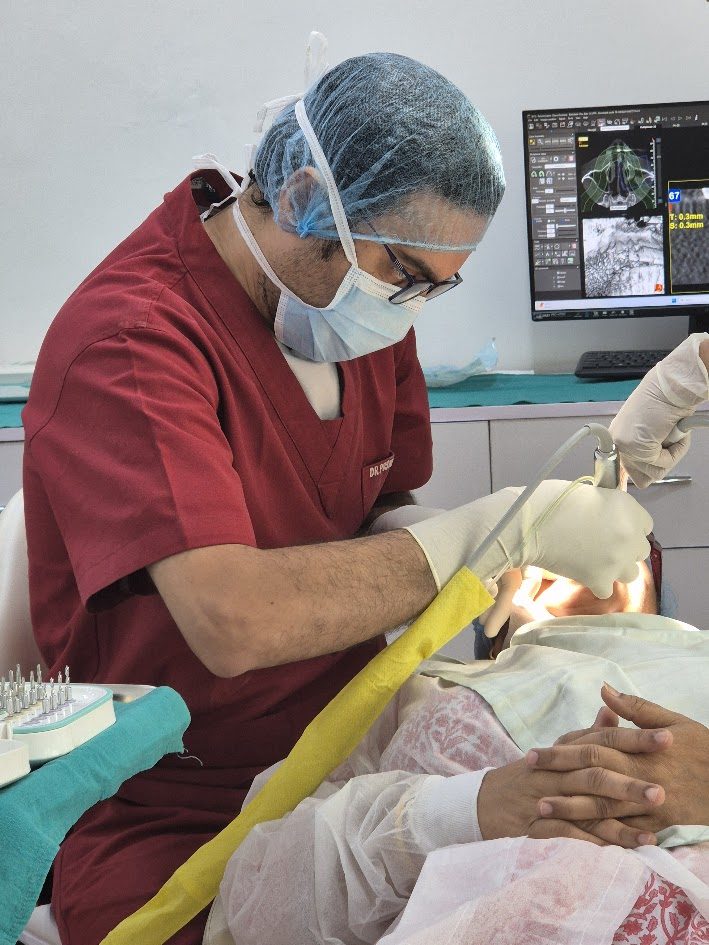
Today he eats everything and enjoys his life.
Why I chose implant dentistry
Giving someone back the ability to smile and chew, after years of suffering with lost, broken, missing or irreparable teeth, is the best feeling there is. I have been in practice for 18 years and placed more than 5,000 implants, including more than 500 full arches, and that feeling has not faded.
Cases like his are why I focus on full-arch and complex implant work: the patients who have been told no somewhere else.
What this blog will cover
Over the next few weeks I will tell the whole story of a dental implant, in order, with a new post every other day.
- Meet the implant. What an implant is, what happens to your jaw when a tooth is lost, and how implants compare with bridges and dentures.
- Inside our clinic. The first consultation, CBCT scans, digital impressions, planning on screen and sterilisation.
- Implant day. Guided surgery, comfort and sedation, and what happens while you heal.
- When it gets complex. Bone grafts, sinus lifts, same-day teeth and All-on-4.
- Advanced and lifelong. Materials, looking after implants for decades, medically complex patients and the future of implant dentistry.
If you have been told implants are not possible for you, send me your X-ray or scan on WhatsApp. I reply personally within 24 hours.
Questions
Can older patients get dental implants?
Yes. There is no upper age limit. General health and the bone available matter more than age, and a CBCT scan shows exactly how much bone there is before anything is planned.
Can you get dental implants with weak bone?
Often, yes. Depending on the scan, the options include tilted implants as in All-on-4, bone grafting, a sinus lift, or zygomatic and pterygoid implants that anchor in denser bone.
Next · Thu 22 Oct
What is a dental implant, really? Three parts, one tiny screw, and why titanium bonds to bone.