A walk through the clinic
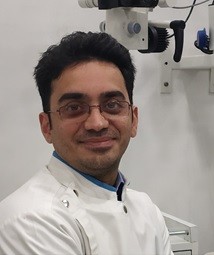 Dr Pushkar Sobti
All-on-X implantologist, Delhi
My father has been running this clinic since 1982, and I have been practising on my own since 2009. Implant dentistry has changed enormously in that time. Today almost everything an implant patient needs happens under one roof: the 3D scan, the planning, the surgery and the lab work that makes the teeth.
The first chapter of this series was about the implant itself. This one is about where it happens. If you are planning to come in, especially from abroad, I think it helps to know what you are walking into.
Coming in
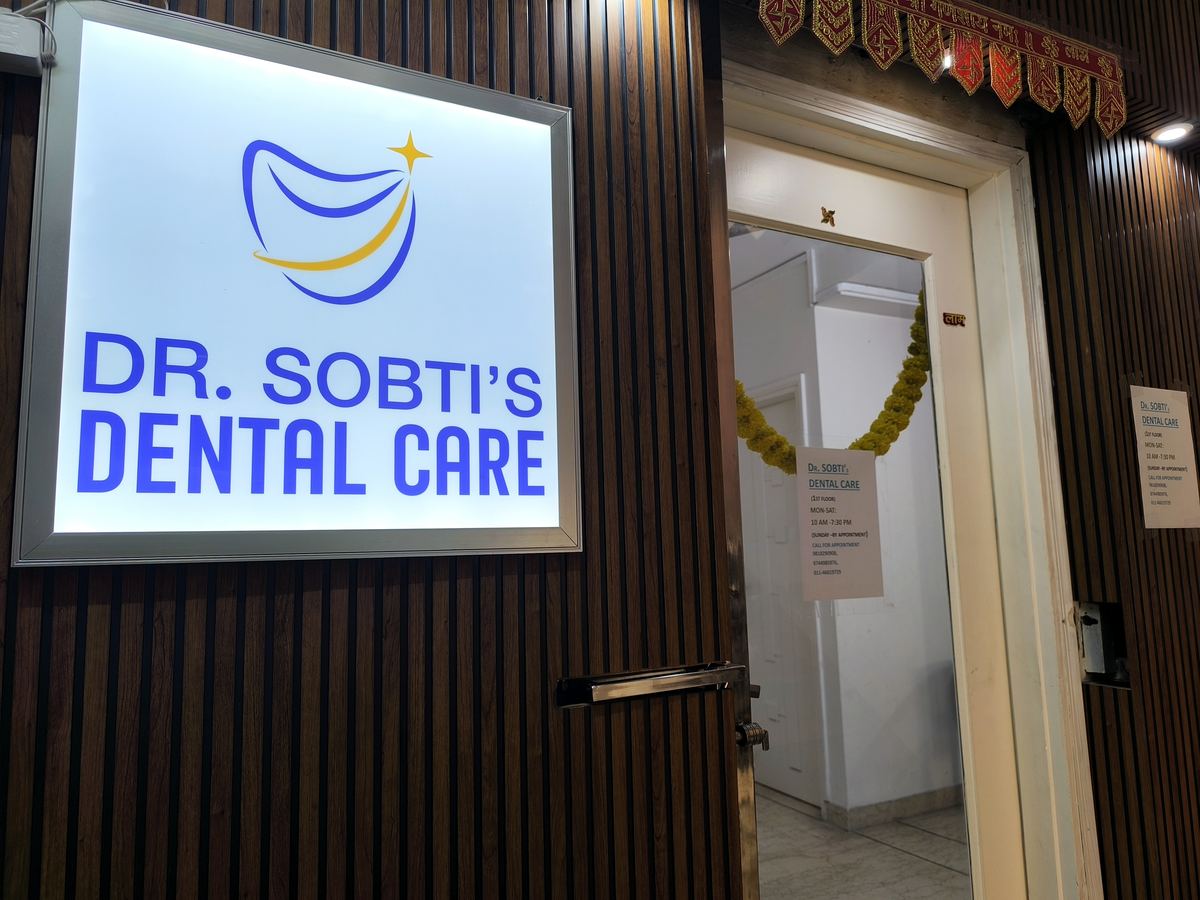
We are on the first floor of J 12/26 in Rajouri Garden Extension, in West Delhi. The clinic is open from 10 in the morning to 7 in the evening, every day of the week, which helps a lot when patients have flown in and only have a fixed number of days.
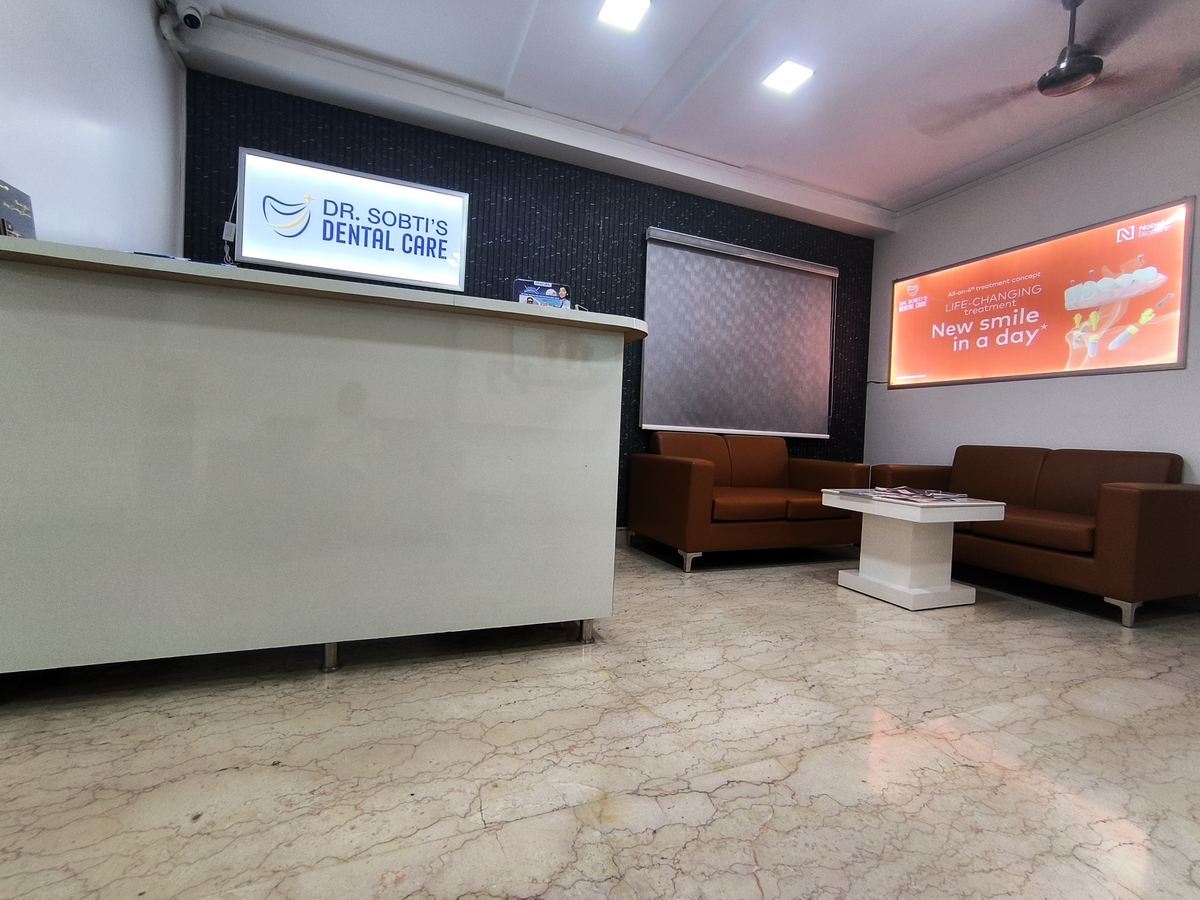
Reception is where you'll be met when you arrive. There's also a separate lounge, which is useful on longer treatment days and for family who come along.
The scan room
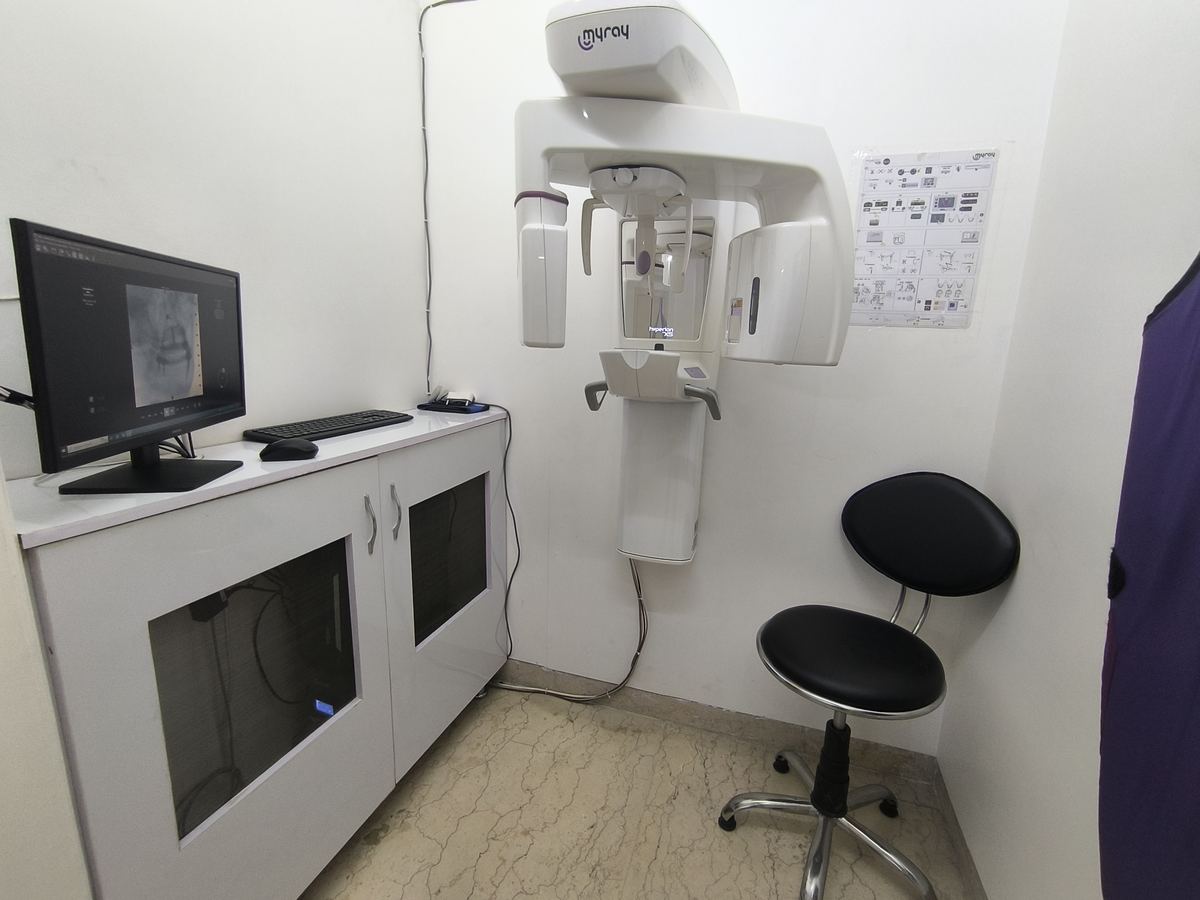
Almost every implant patient spends a minute in front of this machine, a MyRay Hyperion X5 CBCT scanner. You stand still, it turns around your head once, and it builds a 3D picture of your jaw. I've written about why this scan matters so much, and there is a whole post on it later in this chapter. Having it in the clinic means I can sit with you and go through your own scan on the same visit, instead of sending you to a radiology centre and waiting for a report.
The implant surgery room
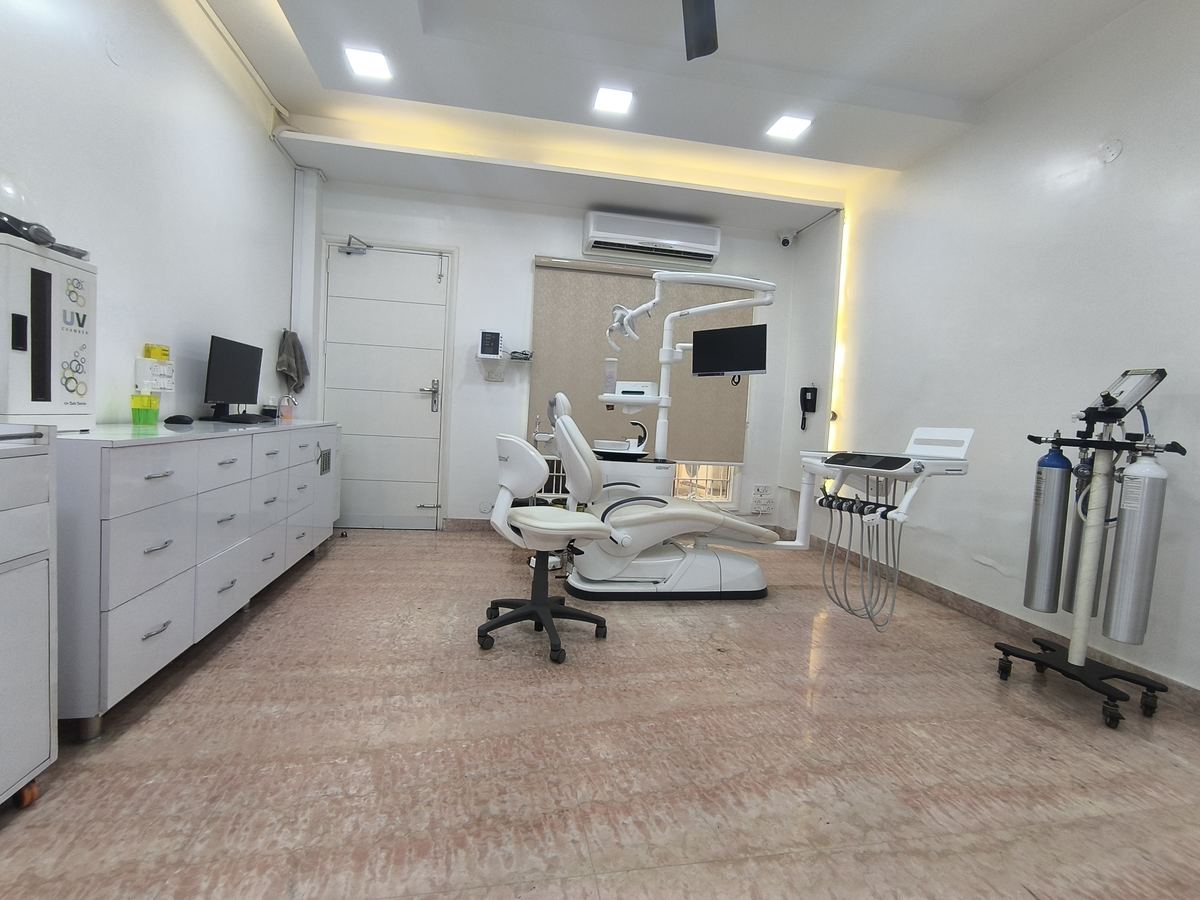
Implant surgery happens in a dedicated operating room. General dentistry, like fillings and cleanings, is done at two other chairs, so the surgical room is kept for surgery.
This is also where conscious sedation is given for patients who are anxious or are having longer full-arch treatment. You stay awake and can respond, but most people remember very little afterwards. The equipment I use on implant day includes a torque-controlled implant motor, piezosurgery instruments for delicate bone work, a PRF centrifuge, and a device that measures how firmly an implant is held. I'll explain each of these properly when we get to implant day.
The microscope room
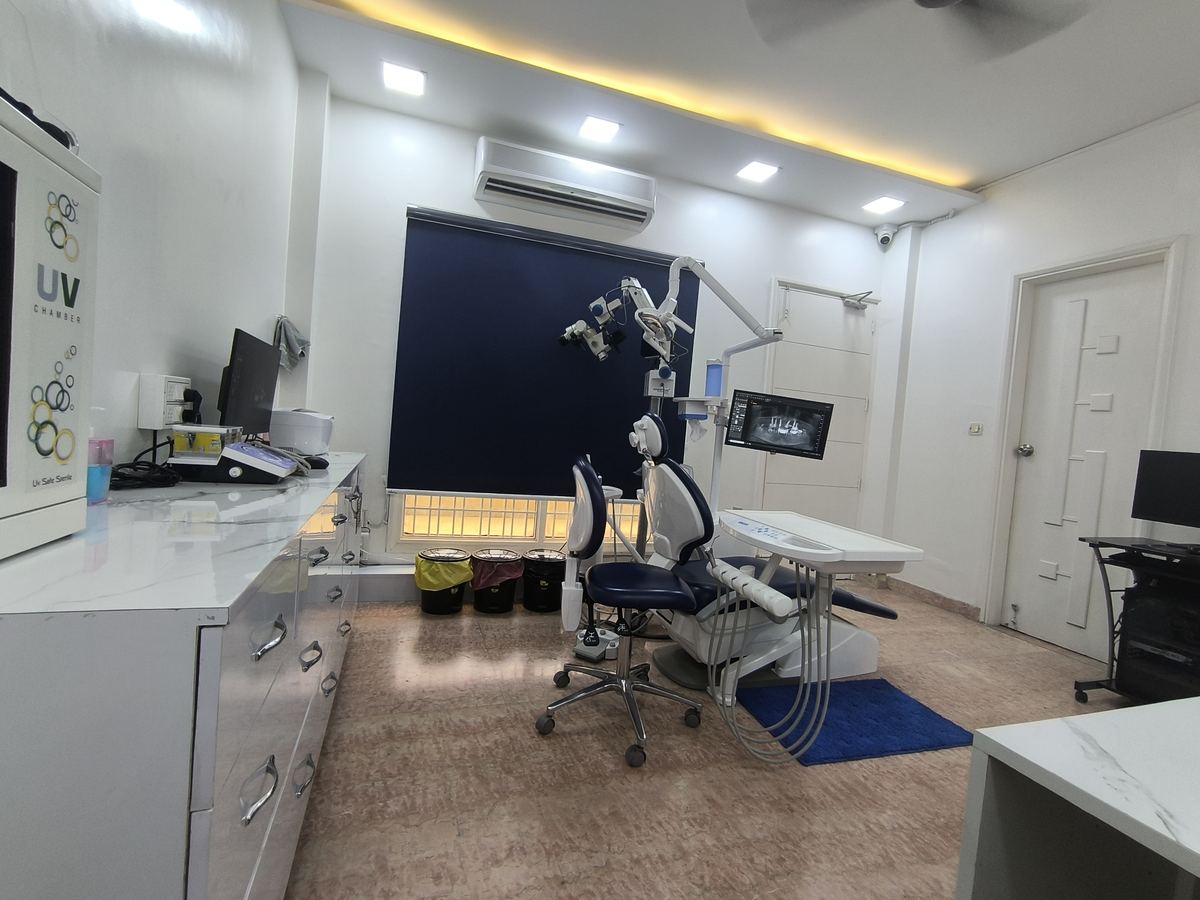
One of our treatment rooms has a dental microscope. A microscope magnifies the tooth many times over, which helps with the finest work, where a fraction of a millimetre matters. For the rest we have three sets of magnifying loupes.
Our own lab
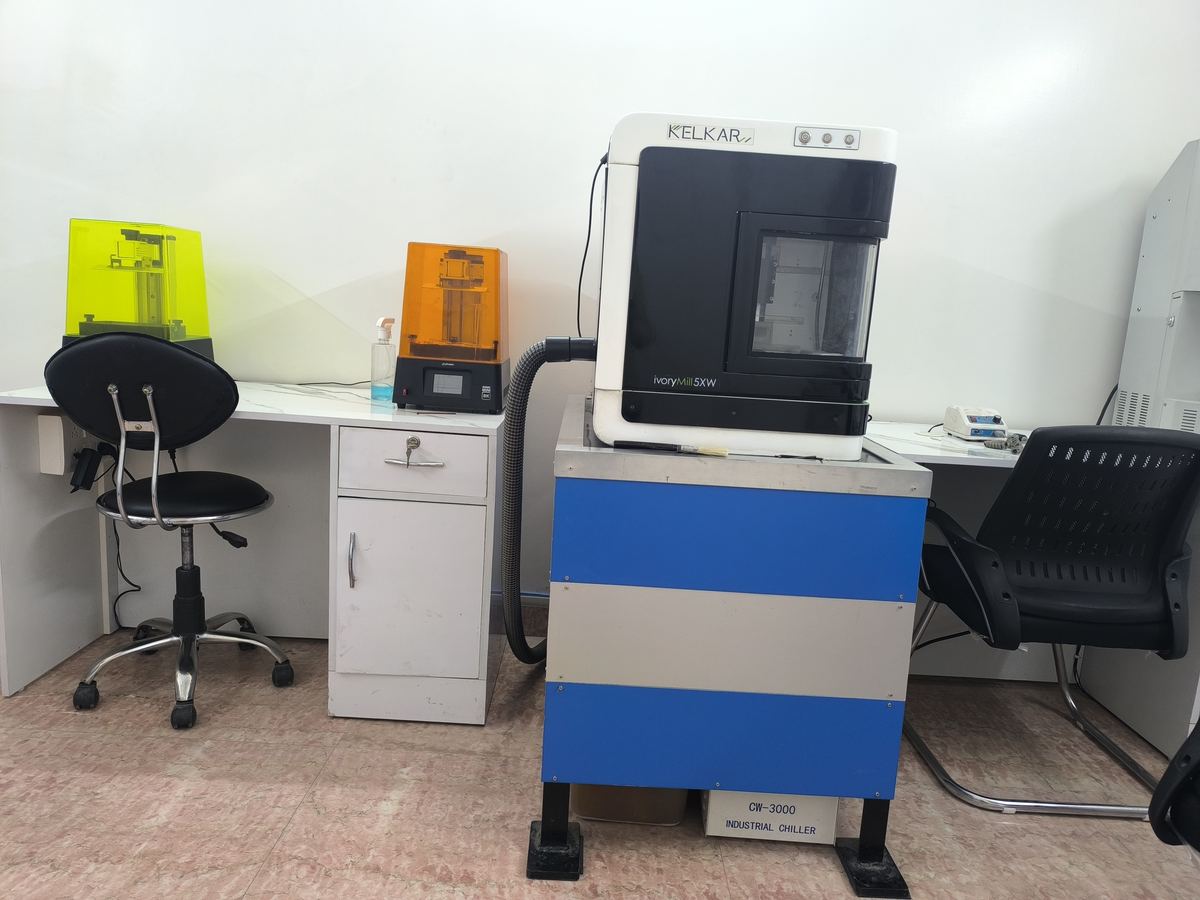
This is the room patients don't usually expect to see. Your new teeth are designed on screen in exocad, and then milled here: zirconia on a Roland mill, glass ceramics and temporary teeth on an Upcera mill, and titanium parts on a Kelkar mill. Impressions are taken digitally with intraoral scanners, so there are no trays of impression paste.
Because the lab is inside the clinic, a crown can be adjusted or remade without waiting on an outside lab, and same-day temporary teeth become practical. For patients who have travelled, that saves days.
Sterilisation
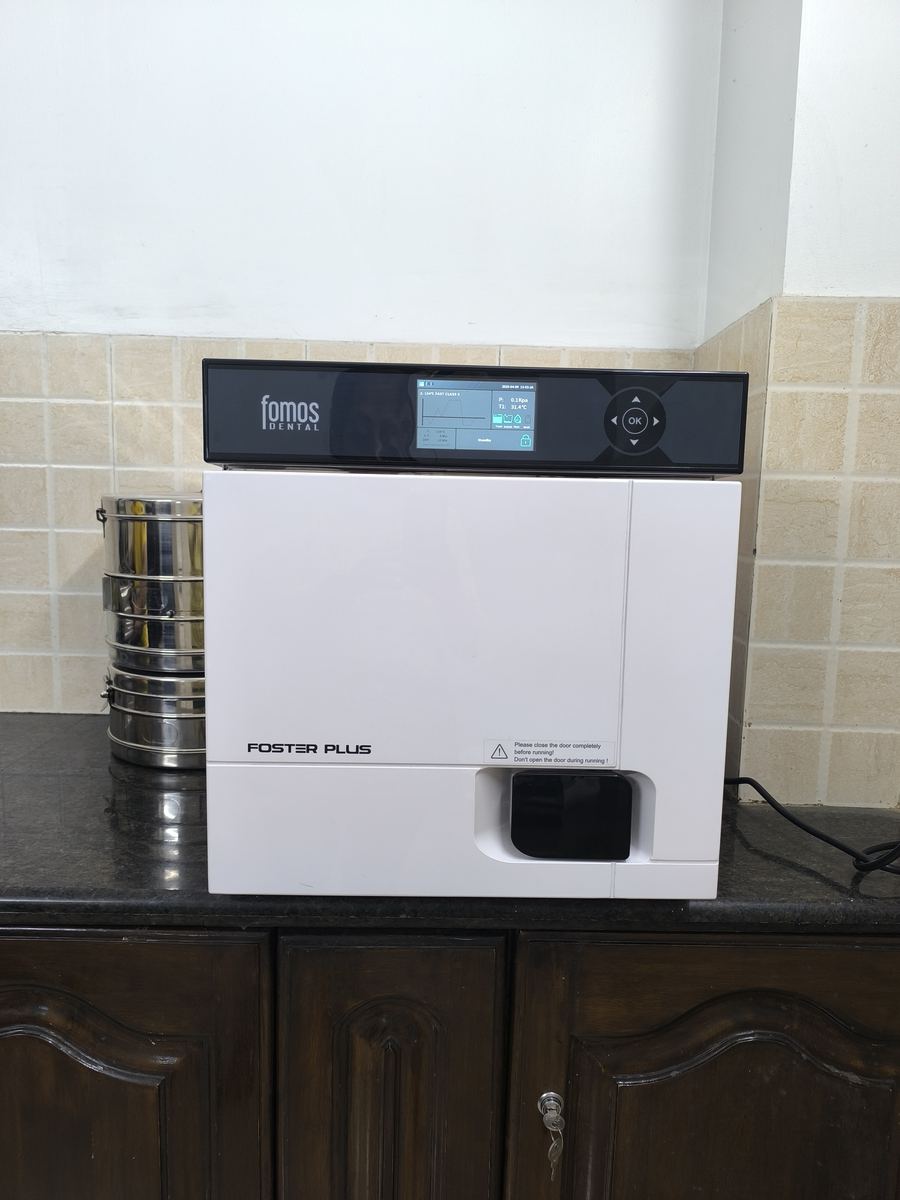
Every instrument goes through a Class B autoclave, the same standard of sterilisation used in hospitals. It removes air from the chamber before the steam goes in, so steam reaches inside hollow instruments and packaging as well as the outside. Patients rarely see this room, so sterilisation gets its own post later in this chapter.
The people
Twelve of us work at the clinic. The equipment helps, but it's the people who look after you through the day, and our patients have given us 5 stars on Google across more than 200 reviews.
If you'd like to see the clinic before deciding anything, you're welcome to visit. If that isn't possible, message us on WhatsApp with anything you'd like to know about the clinic.
Questions
Where is Dr Sobti's Dental Care?
On the first floor of J 12/26, Block J, Rajouri Garden Extension, New Delhi 110027. The clinic is open from 10 am to 7 pm, seven days a week.
Do you have a CBCT scanner at the clinic?
Yes. We have a MyRay Hyperion X5 CBCT scanner on site, so the 3D scan is taken during your visit and I can go through it with you the same day.
Are the crowns made at the clinic?
Yes. Crowns and bridges are designed on screen and milled in our own lab, on a Roland mill for zirconia, an Upcera mill for glass ceramics and temporaries, and a Kelkar mill for titanium.
Next · Tue 03 Nov
Your first consultation. What I look at, what I ask, and the questions you should ask me.